
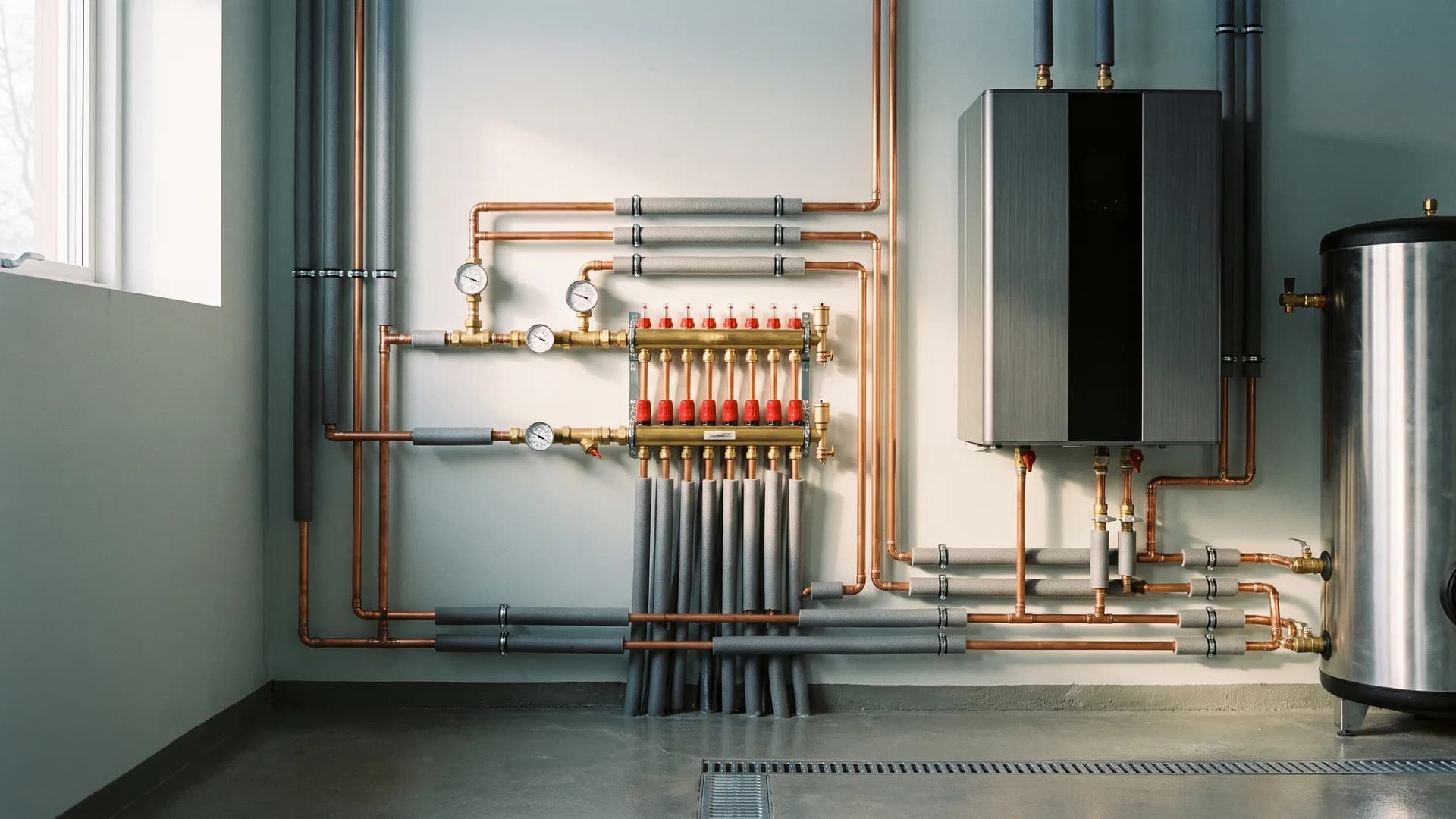
Radiant floors and domestic hot water
Air-to-Water Heat Pumps for New Hampshire Homes
An air-to-water heat pump takes heat out of outdoor air and puts it into water, so one machine can serve radiant floors, some baseboard, and domestic hot water where a boiler does that work today. It is the heat pump type built for a hydronic house, and it sits on the New England Heat Pump Accelerator qualified products list, which discounts up to $750 per qualifying outdoor unit on a home that is not new construction. Whether it fits yours depends on the water temperature the existing emitters need.
Follow the heat through the system
This simplified educational diagram shows the relationship between the outdoor heat pump, the hydronic module, storage and the home's water-based distribution. Final system design depends on the building and selected equipment.
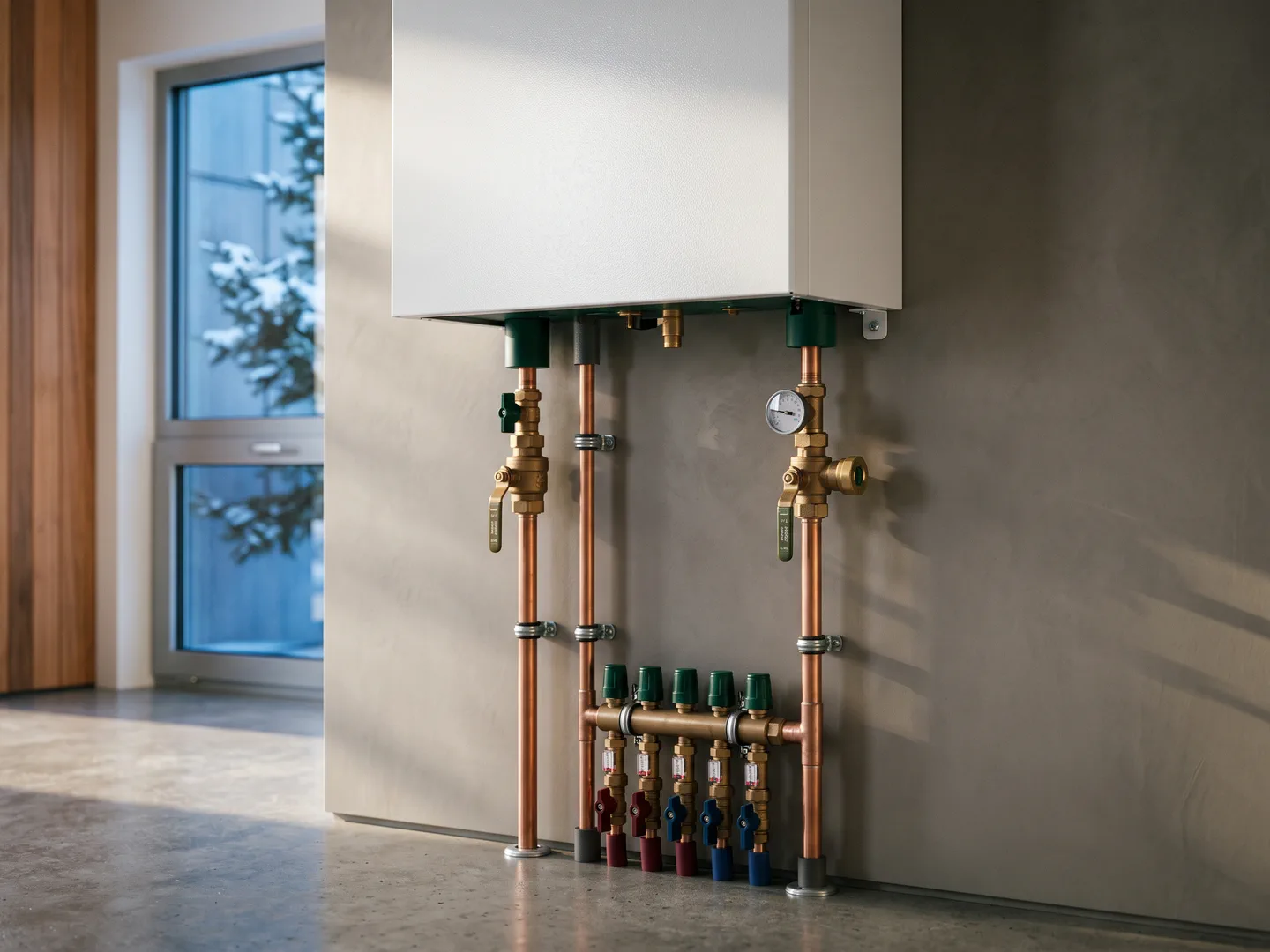
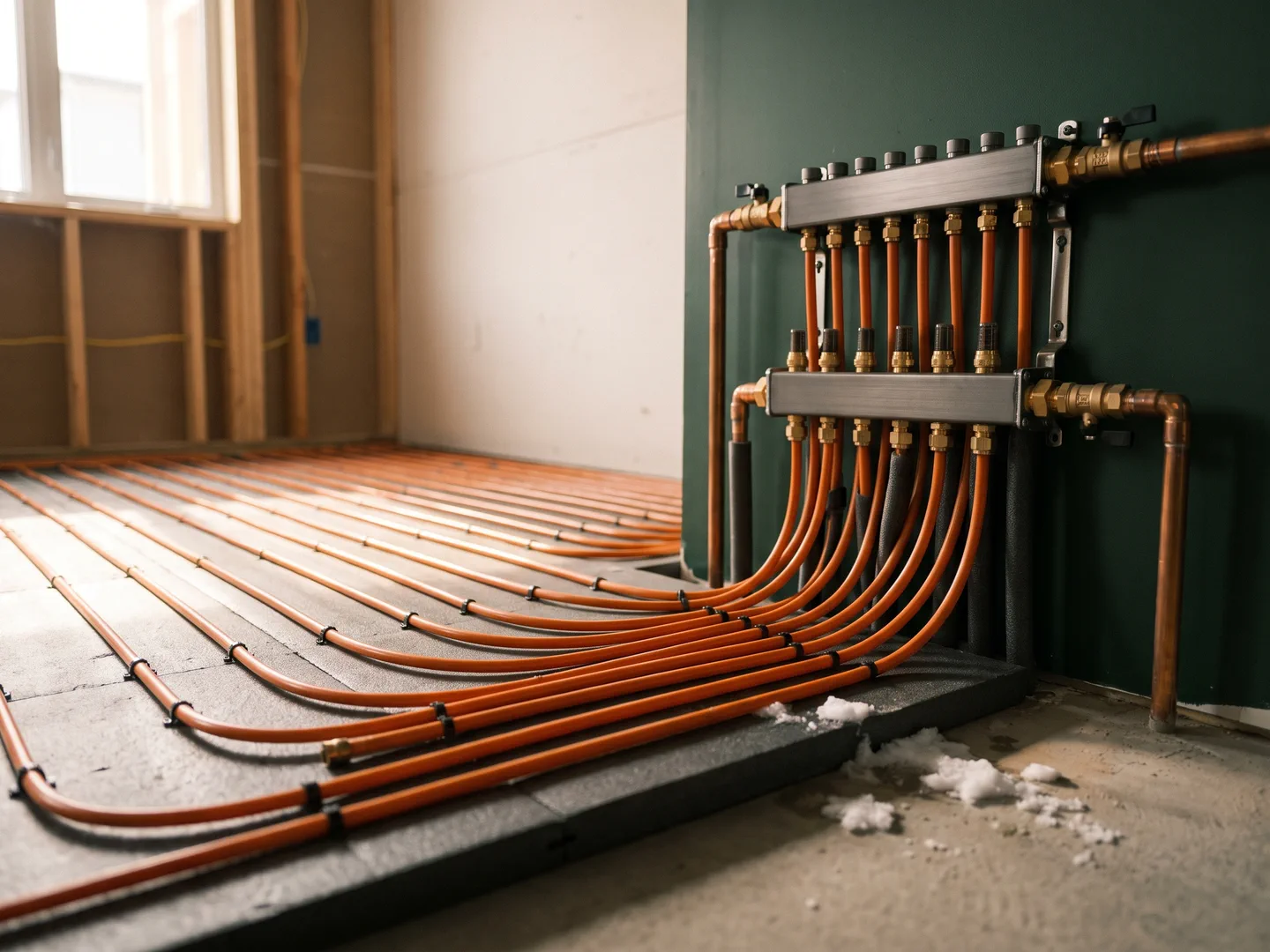
Air-to-water and air-to-air solve different distribution problems
Air-to-water
- Transfers collected heat into water
- Can support hydronic distribution such as radiant loops
- Can be designed around domestic hot-water needs
Air-to-air
- Does not feed radiant-water loops
- Does not make domestic hot water
- Delivers conditioned air directly to rooms or ducts
System anatomy
The parts follow the building's needs
This is an educational overview. Final temperatures, capacities and components require project-specific design.
Outdoor air
The heat pump collects available heat outside and raises it to a useful temperature.
Hydronic module
A water-side module transfers heat into the system that serves the building.
Radiant and hot-water applications
Distribution and storage are designed around the house, its loads and compatible equipment.
Find out what your house actually needs
A conversation with the person who will do the work, not a salesperson working from a script.